
How to Use a French Pink Clay Face Mask: A Gentle Weekly Ritual
Everything you need to use a pink clay face mask well: who it suits, what to mix it with, how long to leave it on, how often to use it and how to care for skin afterwards.
By Aayuvedic Herbals team · · 6 min read
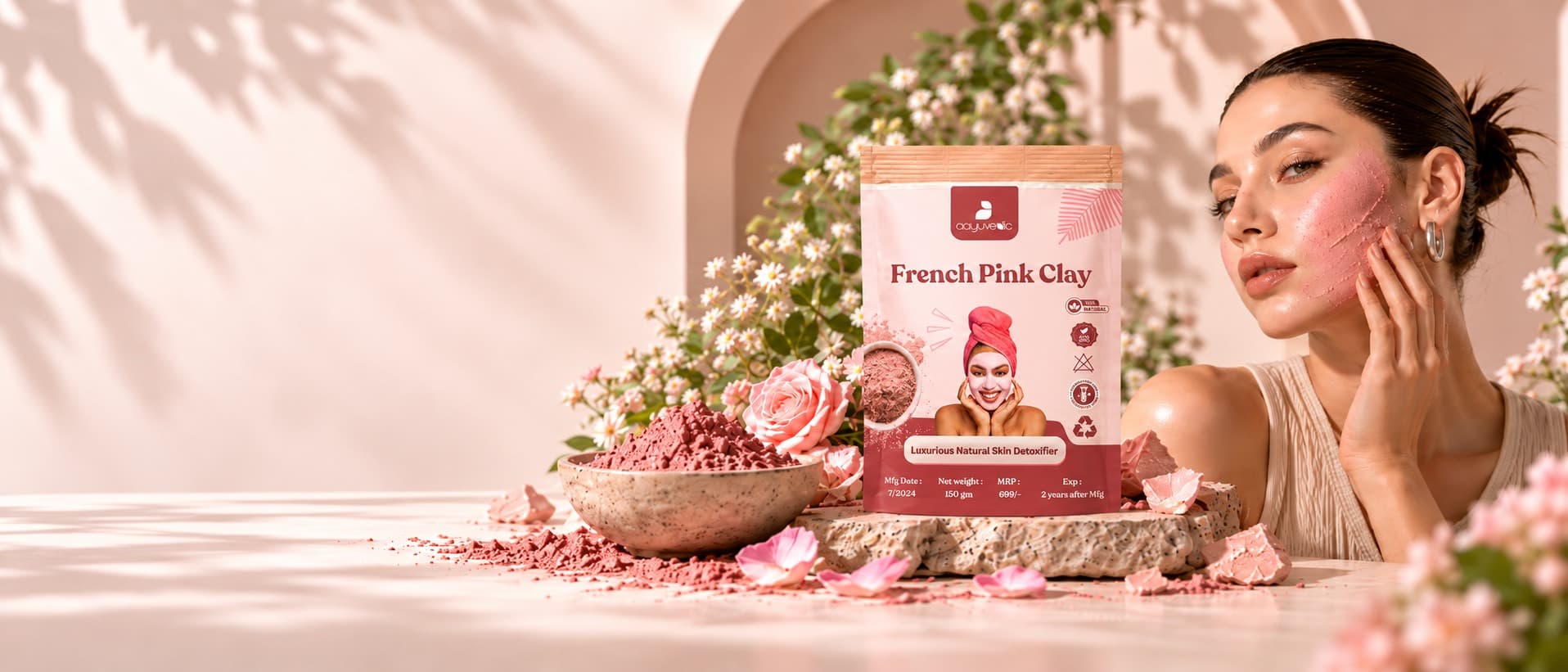
Clay face packs are deeply familiar in India; think of multani mitti mixed with rose water on a summer afternoon. French pink clay belongs to the same family but is known as one of the gentler clays. Its soft pink colour is usually described as a blend of white kaolin and red clay, and it is often chosen by people who find stronger clays too drying.
Used well, a pink clay mask is a simple weekly ritual that helps skin feel clean, refreshed and soft. Used too often, left on too long or mixed too thick, any clay can leave skin tight and uncomfortable. Here is how to get it right.
What is French pink clay and who does it suit?
Pink clay is generally considered milder than bentonite or multani mitti (fuller's earth). It helps absorb excess oil and lift away the day's dust and grime while being less likely to leave skin feeling stripped. In Ayurveda, clays (mrittika) have long been used in lepas, or face and body pastes, for their cooling, cleansing feel.
- Normal and combination skin that wants a gentle weekly cleanse.
- Dry or sensitive-feeling skin that finds stronger clays too tight, using a creamier mix and a shorter time.
- Oily skin looking for a softer alternative to multani mitti between stronger packs.
- Anyone new to clay masks who wants a forgiving place to start.
Skip clay masks on broken, sunburnt, freshly waxed or irritated skin, and check with your dermatologist first if you use prescription skin treatments.
How to mix a pink clay face pack: water, rose water or curd
Start with one to two teaspoons of clay in a small glass or ceramic bowl, and stir with a wooden or plastic spoon. Add your liquid a little at a time until you have a smooth, curd-like paste: thick enough to stay put, thin enough to spread easily.
- Water: the simplest base. Filtered water lets the clay do its work with nothing extra.
- Rose water (gulab jal): a classic Indian pairing with a fresh, cooling feel, lovely in summer and for normal to combination skin.
- Curd (dahi): plain, unflavoured curd makes a creamier, softer mask that suits drier skin. Use it fresh and at room temperature.
- A few drops of honey or aloe vera gel: optional additions if your skin tends to feel dry after clay.
How to apply a pink clay mask, and how long to leave it on
- Cleanse your face and leave it slightly damp.
- Spread an even, thin layer with clean fingertips or a flat brush, avoiding the eyes, eyebrows and lips.
- Relax for 8 to 12 minutes. Sensitive or dry skin may prefer 5 to 8.
- Remove it before it dries completely and cracks. If it starts to feel very tight, mist it with water or rose water.
- Rinse with lukewarm water using gentle circular movements, then pat dry with a soft towel.
A mask that dries rock-hard isn't working harder; it is simply pulling moisture from your skin. Slightly damp at removal is the goal.
With clay, gentler and shorter usually works better than thicker and longer.
How often to use a clay face mask
Once a week suits most skin types. Oily skin may enjoy two sessions a week, while dry or sensitive skin may prefer once every 10 to 14 days. In humid monsoon weeks you might reach for it more; in dry winter months, less. You can also apply it only to the T-zone (forehead, nose and chin) if that's where your skin feels oiliest.
Avoid using a clay mask on the same day as a scrub, peel or exfoliating acid, and give your skin a day or two after waxing or threading.
Aftercare: what to do after a pink clay mask
- Follow with a toner or a splash of rose water, if you use one.
- Apply moisturiser while skin is still slightly damp to keep it comfortable.
- If it's daytime, finish with a broad-spectrum sunscreen.
- Save stronger actives such as retinoids or exfoliating acids for another evening.
If you'd like a ready-to-mix option for this ritual, our French Pink Clay is one choice; use it as directed on the pack.
Patch test and safety notes
Even gentle clays can disagree with some skin. Before your first full mask, apply a little of the mixed paste behind your ear or along your jawline for 10 minutes, rinse and watch the area for 24 hours. Stop if you notice redness, stinging or itching.
In short
- French pink clay is one of the gentler clays, suited to normal, combination and sensitive-feeling skin.
- Mix a smooth paste with water, rose water or plain curd, fresh each time.
- Leave it on for 8 to 12 minutes and rinse before it dries and cracks.
- Once a week suits most people; follow with moisturiser and, by day, sunscreen.
- Patch test first and skip it on broken or irritated skin.
Questions people ask
Daily use isn't recommended. Even gentle clays absorb oil and moisture, and using them too often can leave skin tight or dry. Once a week suits most skin types; oily skin may manage two sessions, while dry or sensitive skin is usually happier with once every 10 to 14 days.
Pink clay is often chosen for sensitive-feeling skin because it is considered milder than bentonite or multani mitti. Mix it with curd or a little aloe vera gel, keep it on for just 5 to 8 minutes and rinse before it dries. Always patch test first, and skip it on irritated or broken skin.
Yes. Rose water is a classic pairing that gives a fresh, cooling feel and works well for normal and combination skin. Add it a little at a time until you have a smooth, spreadable paste. Mix only what you need for one application and use it straight away.
No. Remove a clay mask while it is still slightly damp. Once it dries hard and starts to crack, it can pull moisture from the skin and leave it feeling tight. If the mask dries too quickly, mist it lightly with water or rose water before rinsing.
The Wellness Journal is for general education and inspiration only. It isn’t medical advice — please speak to a doctor or qualified Ayurvedic practitioner about any health concern, and patch test new products before use.
Formulas that fit this routine
Optional steps from our range — read each pack’s directions before use.
Keep reading
 Skin care
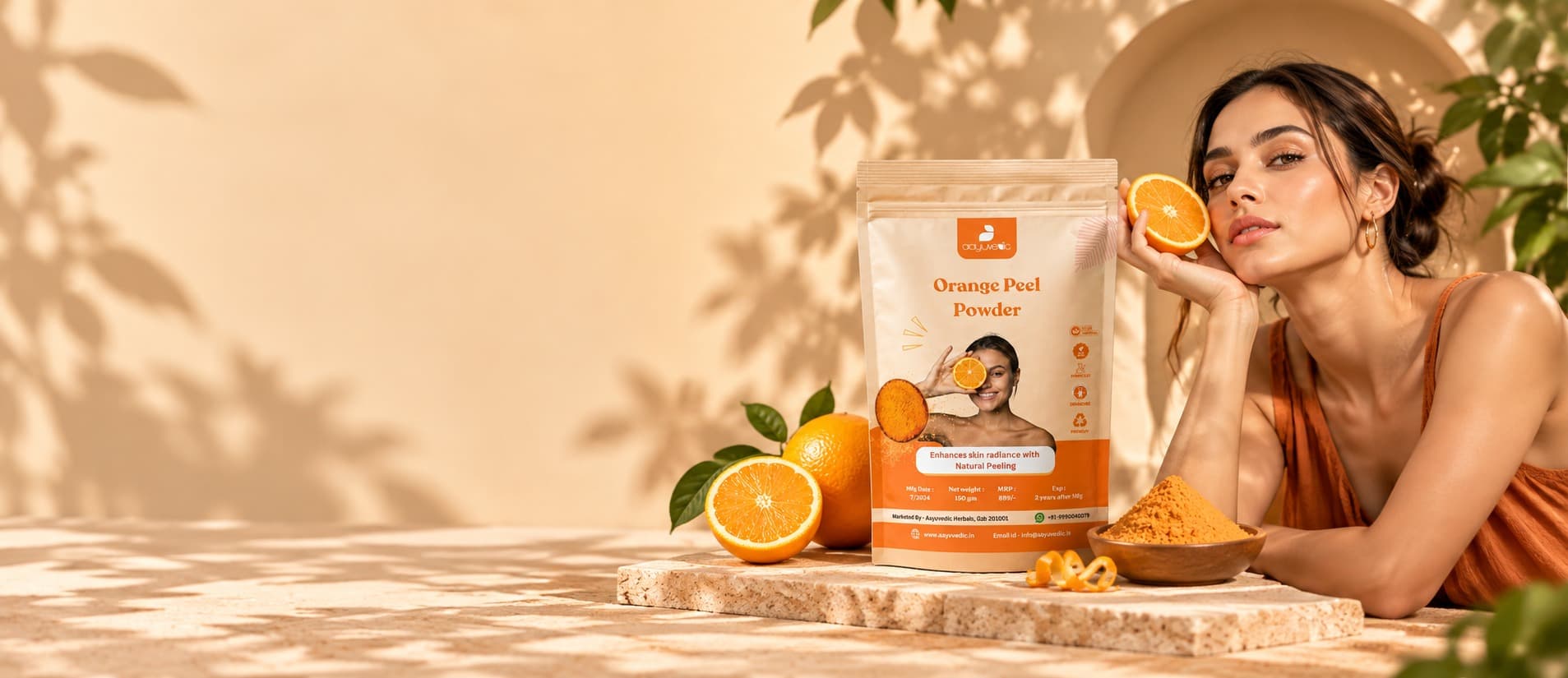
Orange Peel Powder Face Packs: 4 Simple Home Recipes for Glowing-Looking Skin
Four easy orange peel powder face packs to make at home, with curd, honey, rose water, besan or multani mitti, plus how often to use them and how to protect your skin afterwards.
· 5 min read
 Skin care
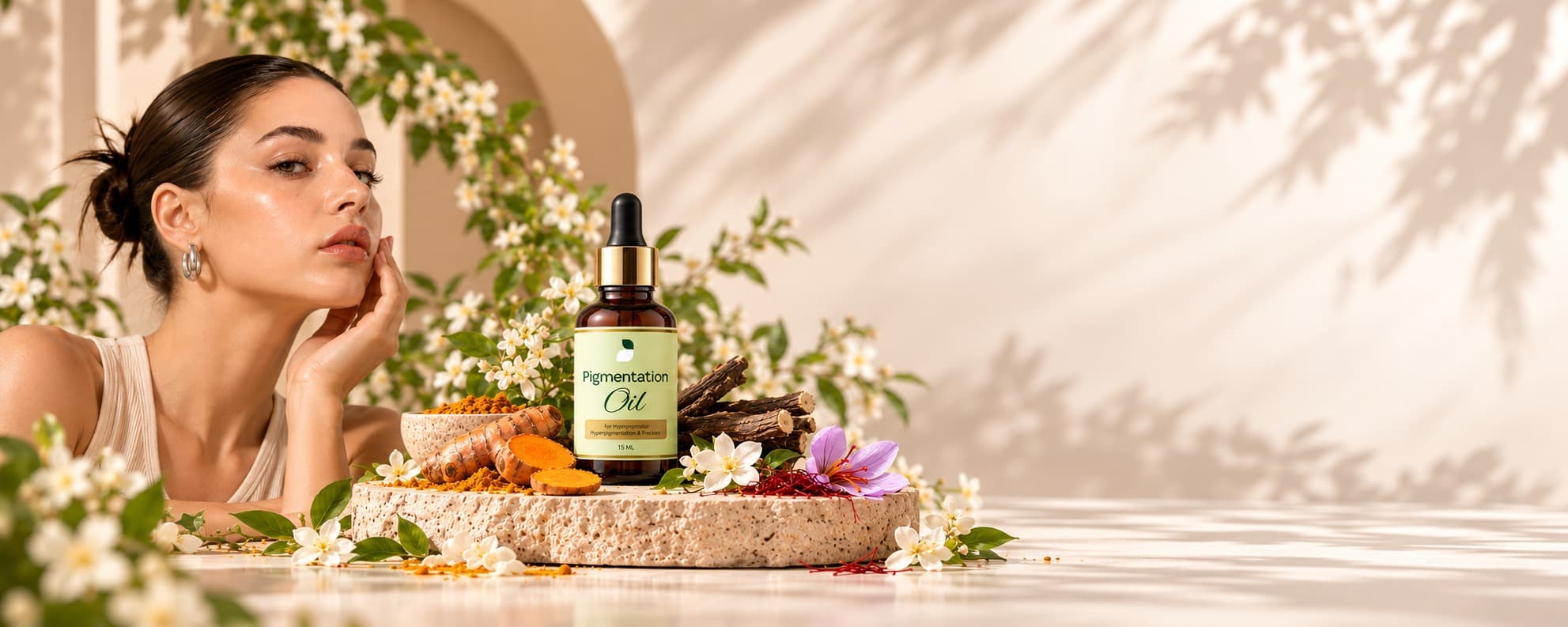
An Ayurvedic Skin Care Routine for Even-Toned, Radiant-Looking Skin
An everyday Ayurveda-inspired routine for even-looking skin, covering cleansing, packs, oiling, sun care and daily habits, plus what pigmentation is and when to see a dermatologist.
· 6 min read
 Daily rituals
Dinacharya: A Simple Ayurvedic Daily Routine for Modern Indian Life
A calm, realistic take on dinacharya, the Ayurvedic daily routine, with small morning, midday and evening habits that fit around office hours, commutes and family life.
· 6 min read